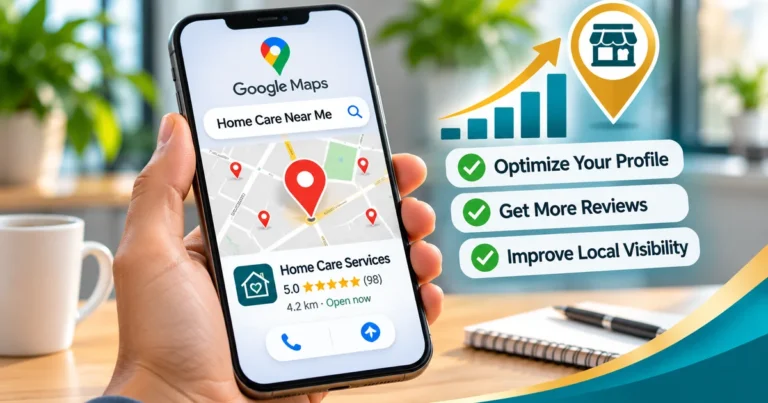
A strong home care marketing strategy has four layers, done in order: make your agency easy to trust (website, Google Business Profile, reviews), respond to every inquiry fast, build steady referral relationships, and then add paid channels. Track inquiries to start-of-care, not clicks, so you know what actually brings clients.
- Fix intake and response time before spending on ads. Slow callbacks waste every other channel.
- Your Google Business Profile and service pages bring the most consistent private-pay inquiries for many agencies.
- Referral partners need a reason to trust you: fast response, clear service areas and updates where permitted.
- Measure inquiries that start services, by source. That number decides your budget.
Before you start: know who you are marketing to
Home care has two audiences, and they search differently. Families (often an adult daughter or son) search on their phone, often in a hurry after a fall or a hospital stay. Referral sources (discharge planners, case managers, senior living staff, elder law attorneys) choose agencies they can rely on and rarely search at all.
Write down three things before you spend anything:
- Your services, in plain words families use: personal care, companionship, respite, dementia care, overnight and 24-hour care.
- Your service area: the cities, towns and ZIP codes you can actually staff today.
- Your payer mix: private pay, long-term care insurance, VA or Medicaid waiver. Marketing for private pay looks very different from marketing for Medicaid clients.
If you provide skilled services, keep the difference clear. Non-medical home care and Medicare-certified home health have different rules, referral paths and messaging.
Days 1–30: build the foundation
The first month is about removing leaks. Every later channel sends people here, so this is where the return is highest.
Website
- One clear page per main service, written for families, with your service area named in plain text.
- A phone number in the header that is tappable on mobile, and a short inquiry form (name, phone, who needs care, ZIP code).
- Real photos of your team where you have permission. Stock photos of smiling seniors build less trust than you think.
- No medical claims or promises. Describe what you do and how you do it.
Google Business Profile
- Pick the most accurate primary category, and check what your top local competitors use.
- Add every service, your service area, hours, photos and a description that sounds like a person wrote it.
- Our Google Business Profile optimization service covers the full setup if you want it done for you.
Intake
Decide who answers calls during business hours, after hours and on weekends, and how fast web inquiries get a reply. A family that reaches voicemail often calls the next agency on the list. An AI receptionist or answering service can cover the gaps, as long as urgent situations always reach a person.
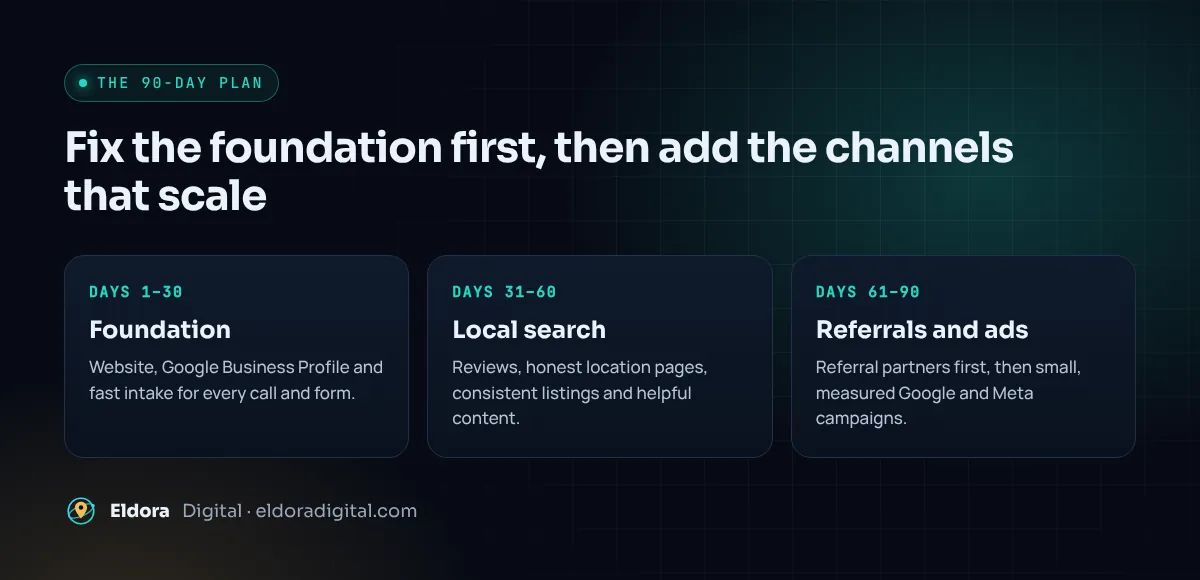
Days 31–60: win local search
Once the foundation is solid, put effort into being found in your area.
- Reviews: ask every satisfied family, every time, with a direct link. Ask everyone, not only the happy ones, and never offer anything in return. Reply to every review without confirming that the reviewer is a client or mentioning care details.
- Location pages: if you serve several towns, create a page for each one only when you have something genuinely local to say: the communities you serve, local hospitals you work with, how quickly you can start care there.
- Citations: make your business name, address and phone number identical everywhere: Google, Bing, Apple Maps, Yelp, Caring.com and similar directories.
- Helpful content: answer the questions families ask, such as how to pay for home care or the signs a parent needs help at home. These pages earn trust before the first call.
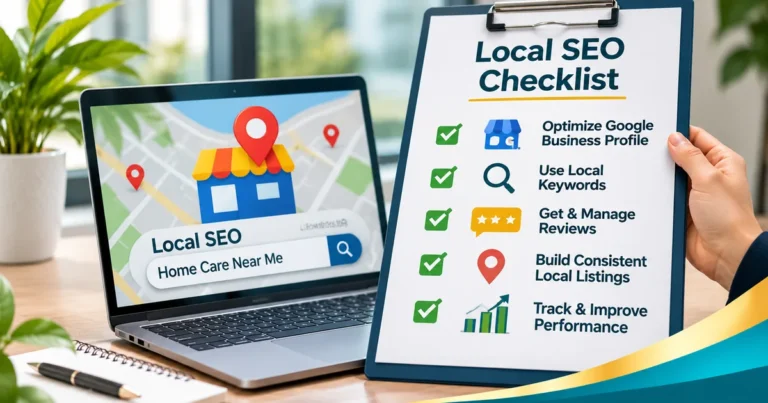
Our guide to ranking in Google Maps explains how relevance, distance and prominence work, and the local SEO checklist gives you a task list to work through.
Days 61–90: referrals and paid channels
With local search working, add the two channels that scale.
Referral partners
List 20 to 30 local referral sources and start with the ones closest to your best clients: hospital discharge planners, rehab and skilled nursing facilities, assisted living communities, geriatric care managers and elder law attorneys. Bring something useful (a one-page service sheet with your service area and how fast you can start care), and follow up on every referral with a quick confirmation.
If your agency bills Medicare or Medicaid, speak with a healthcare attorney before giving anything of value to referral sources. Federal anti-kickback rules are strict.
Paid channels
- Google Ads on high-intent searches like "in-home care near me" can work well once your landing page and intake are ready.
- Meta ads are useful for caregiver recruiting and for reaching adult children with helpful content. Job ads must run in Meta's employment special ad category, which limits targeting. See our Meta Ads management service.
Start small, send each campaign to a page built for it, and judge it on start-of-care numbers, not cost per click.
How to measure what is working
Ask every new inquiry how they heard about you and record it in one place. Each month, look at four numbers by source:
- Inquiries (calls, forms, chats).
- Assessments booked.
- Clients who started services.
- Average hours per week for those clients.
Within one quarter you'll know which channel brings real clients. Put more money there and fix or stop the rest. Most agencies discover that response speed and their Google Business Profile matter more than any single ad campaign.
See our home care marketing service, or request a free local SEO audit to see where you stand today.