
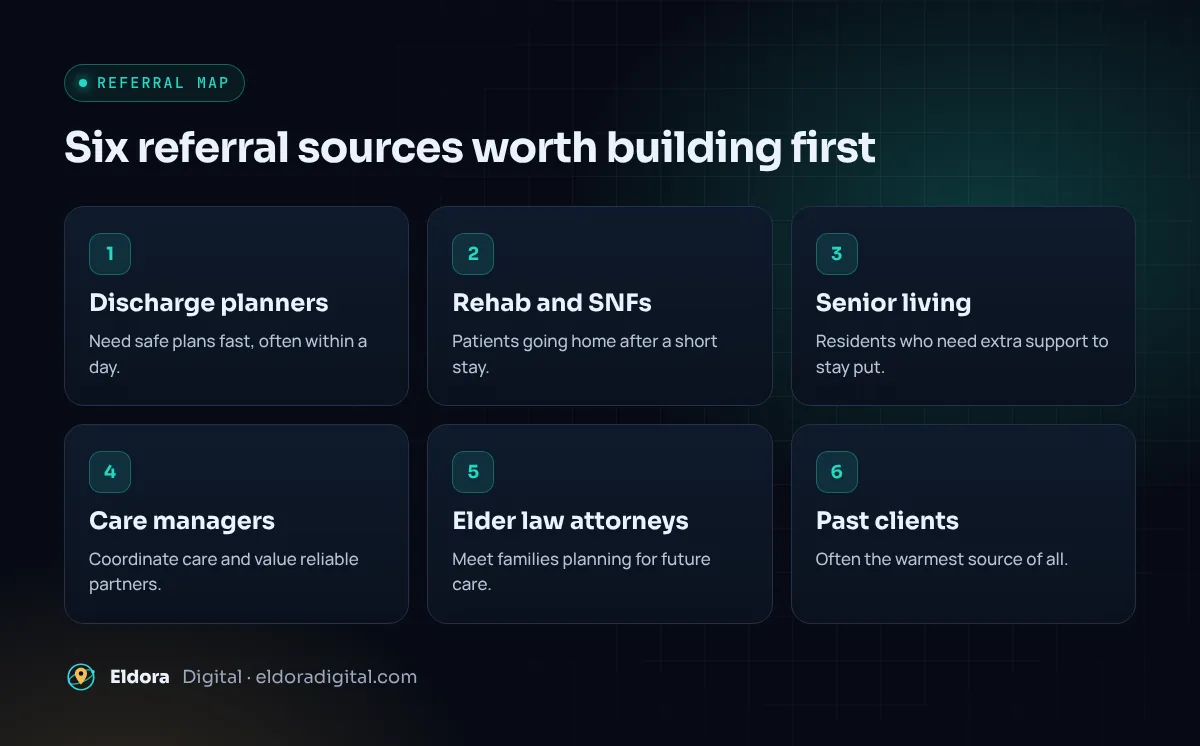
The most valuable home care referral sources are usually hospital discharge planners and case managers, rehab and skilled nursing facilities, assisted and independent living communities, geriatric care managers, elder law attorneys and past clients. Build trust by responding the same day, starting care on time and closing the loop on every referral.
- Start with the referral sources closest to the clients you serve best.
- Reliability is the product: same-day response and on-time starts.
- Make referring easy with one phone number, a short form and clear service areas.
- If you bill Medicare or Medicaid, check anything of value you give referral sources with a healthcare attorney.
The best home care referral sources
- Hospital discharge planners and case managers: they need safe discharge plans, often within a day.
- Rehab and skilled nursing facilities: patients returning home after a short stay often need help.
- Assisted and independent living communities: residents may need extra support to stay where they are.
- Geriatric care managers (aging life care professionals): they coordinate care and value reliable partners.
- Elder law and estate planning attorneys and financial planners: they meet families planning for care.
- Physicians, home health agencies and hospice providers: for clients who also need non-medical support.
- Adult day programs, senior centers and faith communities.
- Past clients and their families: often the warmest source of all.
Private duty agencies usually get the most from senior living, care managers and attorneys. Medicare-certified home health agencies rely more on physicians and hospitals.
How to approach a referral source
- Research first. Know the facility, who makes referrals and what problems they face, such as weekend discharges or clients with dementia.
- Ask for ten minutes, not a lunch. Busy discharge planners appreciate brevity.
- Bring a one-page service sheet: services, service area, hours, minimum shift length, how fast you can start care and a direct phone number.
- Ask how they like to refer: phone, fax, email or an online form.
- Follow up with a short thank-you and your contact details.
Earn trust with every referral
The first referral is a test. Pass it and more follow.
- Acknowledge the referral the same day, ideally within the hour.
- Contact the family quickly and start care when you said you would.
- Tell the referral source the outcome, sharing only what is appropriate and permitted under privacy rules.
- If you cannot take a case, say so immediately so they can place the client elsewhere.
Fast intake matters here as much as in your marketing. Our home care marketing strategy explains how to set up response times that hold up on weekends.
Stay top of mind without being a nuisance
- Visit on a regular, predictable schedule, and bring something useful each time, such as an updated service sheet or a short in-service on topics like fall prevention at home.
- Keep your Google Business Profile and reviews strong. Referral sources often check you online before recommending you to a family.
- Share useful content, such as a family checklist for the first week of home care.
Compliance note: if your agency bills Medicare or Medicaid, the federal Anti-Kickback Statute restricts giving anything of value to people who can refer patients. State rules can apply to private-pay agencies too. Speak with a healthcare attorney before offering gifts, meals or payments to referral sources.
Track referrals like a sales pipeline
Keep a simple list of every referral source with the date of each visit, each referral received and whether care started. Review it monthly: which sources send clients who start care, which have gone quiet and which need a visit. A light CRM, or an automated workflow that logs referrals and reminds your team to follow up, keeps this consistent.
See our home care marketing service, including referral routing and intake automation for agencies.