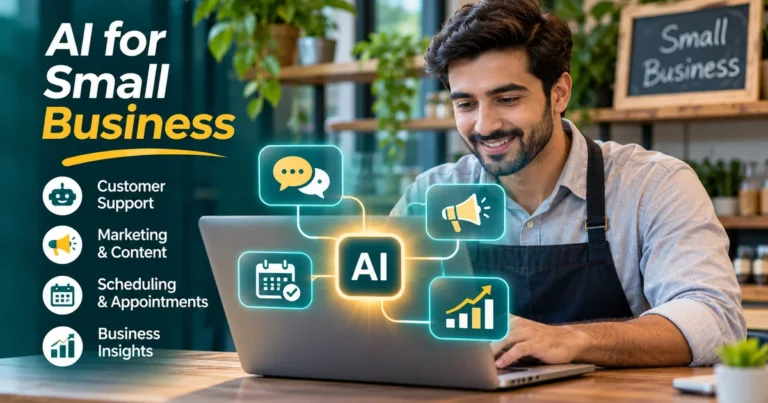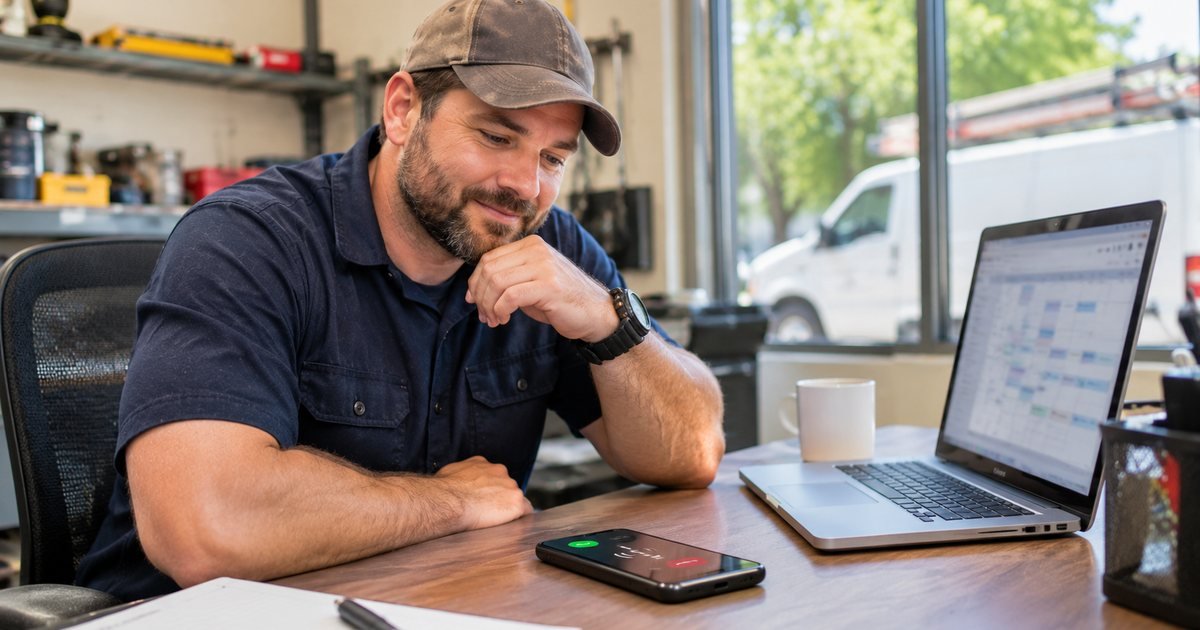
An AI receptionist for small business is software that answers your phone with a natural-sounding voice. It can answer common questions, book appointments, take messages and send urgent calls to a person. It works best for routine calls and after-hours coverage, with clear handoffs to your team.
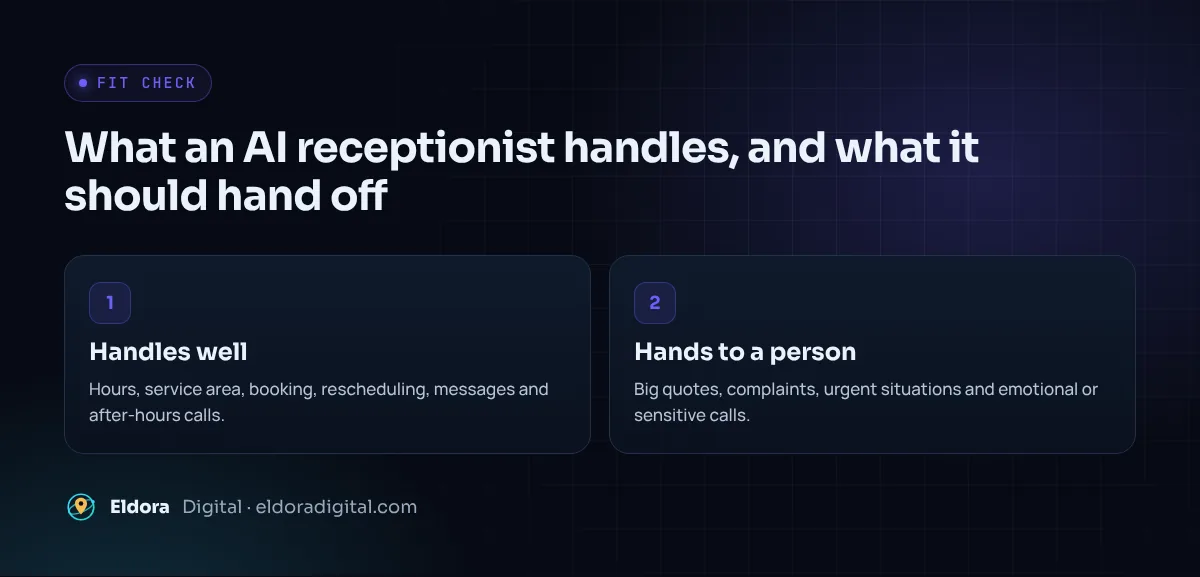
- AI receptionists handle routine calls well: hours, service area, booking and messages.
- They need good information. Your answers, rules and handoffs decide the quality.
- Urgent, complex or emotional calls should always reach a person fast.
- Check recording consent, data handling and, for healthcare, HIPAA before you go live.
What an AI receptionist does
An AI receptionist answers your business line using voice AI. Callers talk normally, and it responds in a natural voice. Most tools can:
- Answer common questions about hours, services, service area and pricing approach.
- Book, change or cancel appointments in your calendar.
- Take detailed messages and text or email them to your team.
- Transfer urgent calls to an on-call person.
- Log every call with a summary.
It's different from an old phone menu. No buttons. Callers just say what they need. If you're new to AI tools, our AI for small business starter guide covers the basics.
Which businesses get the most from one
The best fit is a business that gets many routine calls and loses jobs when nobody answers.
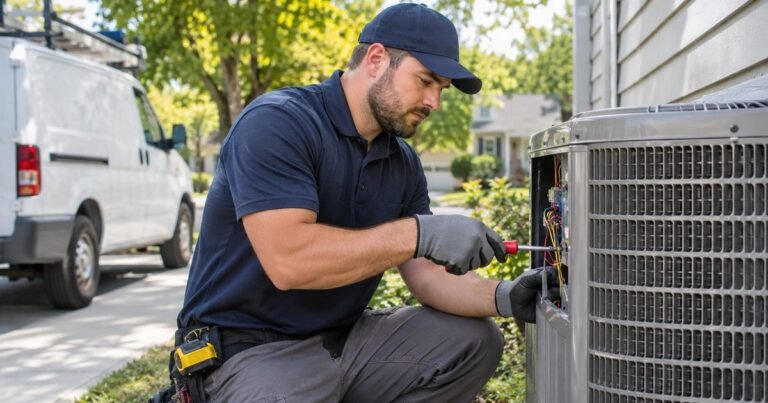
- Home services: HVAC, plumbing and electrical shops get calls while techs are on jobs and after hours. We cover the HVAC side in our HVAC SEO guide.
- Dental and other practices: booking and rescheduling calls take up front desk time. See our dental marketing page.
- Home care agencies: families call at night after a hospital discharge. The AI collects details and routes urgent calls, while your intake coordinator handles the full conversation.
If most of your calls are complex sales conversations, an AI receptionist will help less. Use it for overflow and after hours instead.
A quick test helps. Pull last month's call log. How many calls went unanswered? How many came in after closing? If the answer is "more than a few a week," you're leaving work on the table. Compare the value of a few recovered jobs with the monthly cost of the tool. Your own numbers decide whether it pays.
What an AI receptionist can't do well
Know the limits before you buy. They're real.
- Complex judgment: quotes for big jobs, disputes and unusual requests need a person.
- Emotional calls: a worried family or an angry customer wants a human. Make the handoff easy.
- Missing information: it only knows what you give it. Gaps lead to vague or wrong answers.
- Accents and noise: most tools handle these better than they used to, but test with real calls.
Tell callers they're talking to an AI assistant. Always. It builds trust, and a clear option to reach a person keeps frustrated callers from hanging up.
How to choose an AI receptionist
Pricing models vary a lot, from flat monthly plans to per-minute billing, so compare on total cost for your real call volume. Then check these points. All six matter.
- Calendar and CRM connections: can it book straight into the tools you use?
- Handoff rules: can you set who gets urgent calls, when, and how?
- Knowledge control: can you edit answers yourself, quickly?
- Call records: do you get recordings or transcripts and summaries?
- Data handling: where does call data live and who can access it?
- Trial with real calls: listen to at least 20 recordings before you commit.
Our AI receptionist service sets this up and tunes it for your business. If you also want help on your website, pair it with an AI chatbot.
Rules to follow before you go live
- Call recording: consent laws differ by state, and some require every party to agree. Play a short notice at the start of each call.
- Outbound calls: the FCC ruled in February 2024 that AI-generated voices in robocalls count as artificial under the TCPA. Outbound AI calls need proper consent. Answering inbound calls is a different use, but get advice before you use AI to call customers.
- Healthcare: if the tool handles patient information, you likely need a business associate agreement under HIPAA.
- Texting: get consent before sending follow-up or marketing texts.
How to get started in a week
Start small. Expand once it works.
- List your 15 most common calls and the right answer for each.
- Write handoff rules for urgent and sensitive calls.
- Turn it on for after-hours calls first.
- Review recordings daily for the first two weeks and fix weak answers.
- Add daytime overflow once you trust it.
Then connect the pieces. Calls booked by the AI should land in your calendar and CRM without anyone retyping them. Follow-up texts, review requests and job reminders can run as automations behind it. That's where the real time savings show up.
Google is also testing AI agents for Business Profile messages. Keep your answers consistent across phone, chat and your profile. For a bigger picture of where AI fits, our AI consulting team can map it out with you.
See how our AI receptionist service works, or book a strategy call to see if it fits your business.