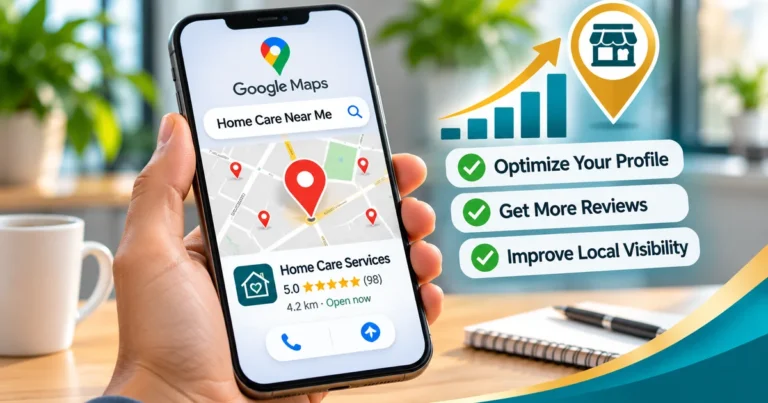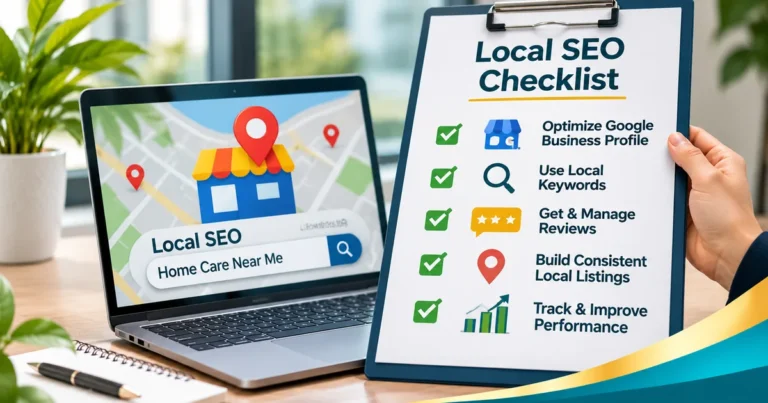
Home care SEO is the process of helping a home care agency appear in Google Maps and organic search when families look for care. It combines a fully optimized Google Business Profile, service and location pages, consistent listings, steady reviews and helpful content. Results usually build over several months.
- The map pack and the organic results are two different races. Most agencies need both.
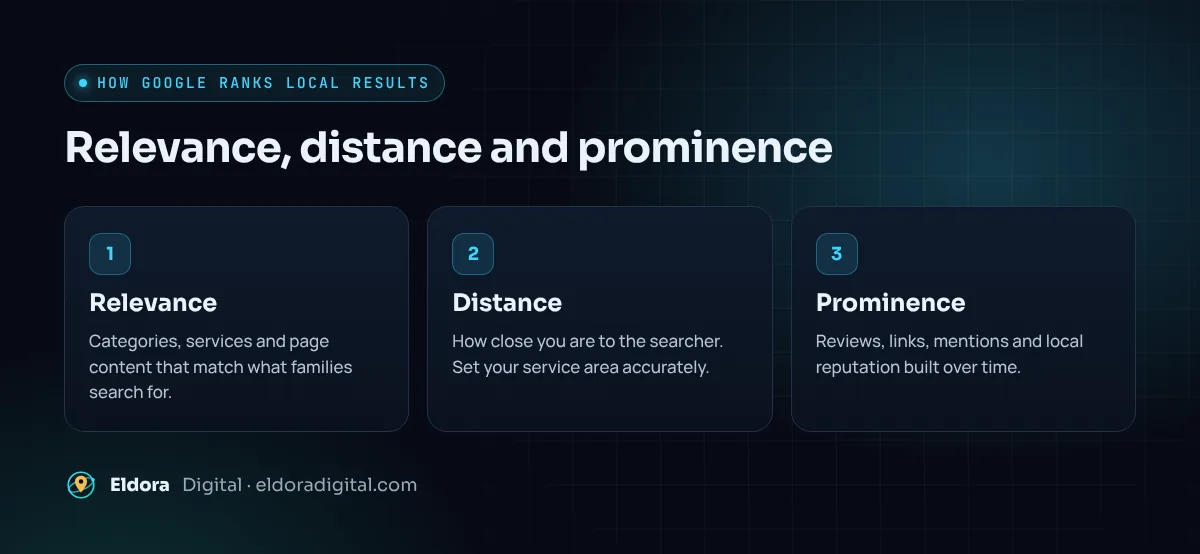
- Relevance comes from categories, services and page content. Prominence comes from reviews, links and mentions.
- Location pages only help when they contain real local substance.
- Avoid shortcuts such as fake addresses, keyword-stuffed business names and bought reviews. They put your listing at risk.
How families find home care on Google
A typical search such as "in-home care near me" or "home care in [city]" shows a map with three businesses (the map pack), followed by organic results: agency websites, directories and articles. Many families also ask AI assistants, which draw on similar signals.
Google says local results are ranked on relevance, distance and prominence. You cannot move your office, but you can control most of the rest. Our guide to ranking in Google Maps goes deeper on each factor.
Your Google Business Profile
- Primary category: choose the most accurate one available and review competitors' choices. Add secondary categories only if they truly apply.
- Services and description: list each service in the words families use. No keyword stuffing.
- Service area: if families do not visit your office, set it up as a service-area business and hide the address.
- Business name: use your real name exactly as it appears on your signage and paperwork. Adding keywords to it violates Google's guidelines.
- Photos and updates: real team photos (with permission) and regular posts show an active, real business.
Our Business Profile optimization service handles this end to end.
Website pages that rank and convert
Google needs to understand exactly what you offer and where. Families need to trust you within seconds.
- Service pages: one page each for personal care, companionship, respite, dementia care, overnight and live-in care, as applicable.
- Location pages: one per town or county you staff, with genuinely local details: communities served, hospitals and facilities you work with, how quickly you can start care there.
- Titles and headings that say what the page is about, such as "In-home care in Plano, TX".
- Speed and mobile: most families search on a phone. A slow site loses them.
- Schema markup: structured data for your organization, services and FAQs helps search engines read your pages.
Avoid publishing dozens of near-identical city pages. Thin, duplicated pages can drag down the whole site.
Reviews, citations and links
Reviews are a major prominence signal and the first thing families read. Ask every family, reply to every review and never confirm someone is a client or mention care details in a public reply.
Citations are listings of your name, address and phone number on other sites: Bing Places, Apple Business Connect, Yelp, Caring.com, the BBB and your local chamber. Keep them identical.
Links and mentions from local organizations, such as senior centers, community events, local news and partner facilities, show Google that your agency is real and trusted locally.
Content that answers family questions
Families research long before they call. Articles that answer questions like "how to pay for home care", "home care versus assisted living" or "signs a parent needs help at home" bring in early-stage visitors and support your service pages through internal links.
Write in plain language, keep it non-medical unless a clinician reviews it, and put a direct answer near the top of each article. That format also helps AI assistants quote you. See how to get recommended by ChatGPT and AI search.
How long home care SEO takes
Fixes to your Business Profile and site can show movement within weeks. Competitive local rankings usually take four to six months of steady work, longer in large metro areas. Track your map rankings from several points across your service area, not only from your office, and judge success by calls and assessments, not rankings alone.
For the full picture of where SEO fits with referrals and ads, read our home care marketing strategy.
Request a free local SEO audit, including a geo-grid scan of your service area, or see our AI-powered local SEO service.