Veterinary SEO helps a clinic appear in Google Maps and search results when pet owners look for a vet nearby. The basics are a complete Google Business Profile, a page for each service, honest hours, steady reviews and a fast answer when the phone rings. Track booked appointments by source, not only rankings.
- Most new-client searches are won in the map pack, so your Business Profile matters first.
- Give each service its own page: wellness exams, vaccines, dental care, spay and neuter, surgery.
- List emergency hours only if a person really answers. Wrong hours lose trust fast.
- A missed call is a lost client. Fix the phones before you spend more on ads.
How pet owners search for a vet
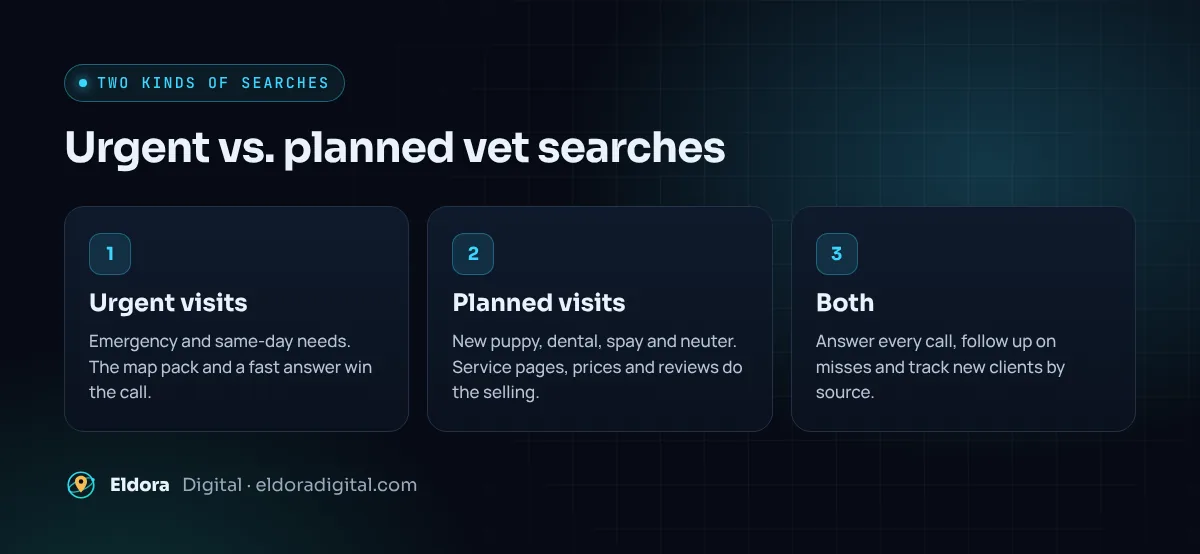
Veterinary searches fall into two groups. Urgent searches like "emergency vet near me" happen on phones, often at night, and end in a call within minutes. Planned searches like "vet for new puppy", "dog spay cost" or "cat dental cleaning" involve more comparing of reviews, prices and photos.
For urgent searches, the map pack does most of the work. For planned visits, your website and reviews carry more weight. Google says local results are ranked mainly on relevance, distance and prominence, which it explains on its local ranking help page. Our guide to ranking in Google Maps shows how each factor works in practice.
Set up your Google Business Profile properly
Your profile is often the first thing a new client sees, so treat it like a second front door.
- Primary category: "Veterinarian" for most clinics. Add secondary categories such as animal hospital or emergency veterinarian service only if they truly describe you.
- Services: list wellness exams, vaccinations, dental care, surgery, senior pet care and anything else you offer, with a short plain description of each.
- Hours: show real hours, including holidays. Mark emergency hours only when someone answers.
- Photos: your building, your team and the waiting area. Pet owners like to see where their animal will be.
- Business name: use your real name. Stuffing keywords into it breaks Google's profile guidelines and can get the listing suspended.
Not sure where your profile stands? Try our Business Profile score quiz, or let our Business Profile optimization team handle setup and upkeep.
Website pages that bring in new clients
Your website tells Google what you do and where. It also convinces a nervous pet owner that your clinic is the right one.
- Service pages: one page each for wellness exams, vaccines, dental care, spay and neuter, surgery, senior care and any special services. Say what a visit involves and who is on your team.
- New client page: what to bring, how to book, what the first visit costs or how pricing works, and which species you see.
- Team page: real photos and short bios. Pet owners choose people as much as clinics.
- Location detail: your address, parking, service area and hours on every key page.
Mark up your clinic details with LocalBusiness structured data. It helps search engines read your page, but it doesn't guarantee any ranking. See our veterinary marketing page for how we build these sites.
Reviews: ask, reply and stay within the rules
Pet owners love to talk about their animals, which makes reviews easier to earn than in most industries. Ask after a good visit with a direct review link sent by text or email. Ask everyone, not only the people you think will be happy.
Reply to every review in a calm, short way. Thank the person, leave out medical details about the pet and invite upset clients to call the clinic. Treat client details as private, even though animal records aren't covered the way human health records are.
Don't offer discounts or gifts in exchange for reviews, and don't filter who gets the link. The FTC's rule on consumer reviews bans fake reviews and the suppression of honest ones. For a wider list of tasks, use our local SEO checklist.
Answer the phone, then measure what it brings
Vet teams are busy. Techs hold animals, doctors are in surgery and the front desk is checking someone in. Calls get missed, and a missed call usually goes to the next clinic on the list.
- Count missed calls every week. The number is often higher than owners expect.
- Cover lunch hours, evenings and weekends with a person, an answering service or an AI receptionist that takes details, books routine visits and sends true emergencies straight to your team. It should never give medical advice.
- Use automation for appointment reminders and review requests so staff don't have to remember them.
- Ask every new client how they found you and record it.
Then compare sources monthly: Google Maps, website, referrals and ads. Put your effort where new clients actually come from.
Content and AI search for vet clinics
New pet owners ask a lot of questions. How often should a puppy see the vet? What does a dental cleaning involve? When should an older cat have bloodwork? Short, honest answers on your site bring in early searches and build trust before the first call. Have a veterinarian on your team review any health content before you publish it, and never promise results.
The same clear answers help in AI search. Tools like ChatGPT and Google's AI Overviews tend to quote pages that answer directly, name the service area and match your Business Profile. Our guide on getting recommended by AI assistants covers the basics, and our AI search optimization service can do the work for you.
Want a quick read on where you stand? Request a free local SEO audit and we'll check your profile, pages and nearby competitors.
See our veterinary marketing service, or book a call and we will review your profile with you.