
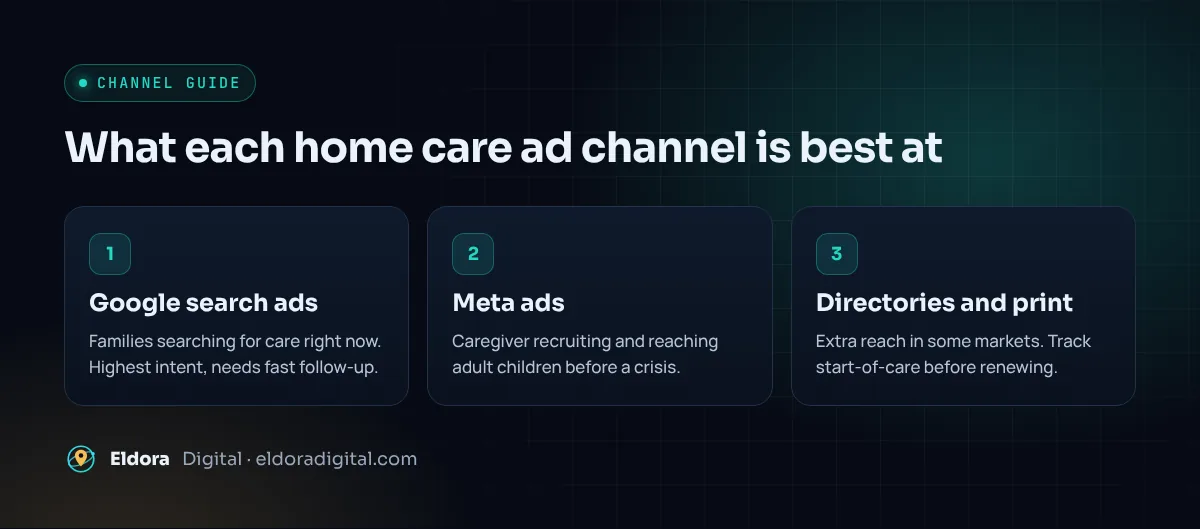
The best home care advertising usually starts with Google Ads on high-intent searches like "in-home care near me", sent to a page built for that service and area, with fast follow-up on every inquiry. Meta ads work well for caregiver recruiting and for reaching adult children. Judge every channel by clients who start care, not clicks.
- Fix your landing page and intake before you advertise. Ads magnify whatever is already there.
- Google Ads captures families who are searching now. Meta reaches people who are not searching yet.
- Caregiver job ads on Meta must use the employment special ad category.
- Track start-of-care by campaign. Cost per click tells you very little.
Before you spend a dollar
Ads send people to your phone line and website. If either is weak, more traffic only means more lost families. Check three things first:
- A landing page per campaign: the service, the area, a tappable phone number, a short form and reasons to trust you.
- Fast response: calls answered live, and web inquiries answered within minutes. An AI receptionist can cover nights and weekends.
- Tracking: call tracking and form tracking so every inquiry is tied to its source.
If those are not in place yet, start with the foundations in our home care marketing strategy.
Google Ads: reach families who are searching now
Search ads appear when someone types a query such as "home care for elderly parent in [city]". These people already need help, which makes search the most direct paid channel for most agencies.
- Keywords: focus on service plus location terms. Add negative keywords for job seekers ("jobs", "hiring", "salary") unless you are recruiting.
- Location targeting: only the areas you can staff.
- Ad schedule: run ads when someone can answer the phone, or make sure after-hours calls are covered.
- Ad copy: be specific and honest. No medical claims, no promises about outcomes.
- Conversion tracking: import calls and form submissions so Google optimizes for inquiries, not clicks.
Search ads work best alongside strong organic visibility. See home care SEO for the long-term side.
Meta ads: recruiting and reaching adult children
Facebook and Instagram are less about urgent searches and more about awareness and trust.
- Caregiver recruiting: often the strongest use of Meta for agencies. Job ads must run in Meta's employment special ad category, which limits age, gender and ZIP-code targeting.
- Adult children: helpful content, such as signs a parent needs help or how to talk about care, builds familiarity before a crisis.
- Retargeting: remind recent website visitors about a free consultation.
Keep health details out of ad targeting and website tracking. Our Meta Ads management service sets campaigns up within these rules.
Directories, print and other channels
- Senior care directories and lead services can bring volume, but leads are often shared with several agencies. Respond within minutes and track how many actually start care before renewing.
- Print (local papers, church bulletins, senior center newsletters) can still reach older adults and their families in some communities. Use a dedicated phone number so you can measure it.
- Local sponsorships of community events build familiarity and sometimes earn links and mentions that help your local SEO.
How to measure home care advertising
For each channel, track monthly spend, inquiries, assessments, clients who started care and their average weekly hours. Divide spend by clients who started care to get your real cost per client. Compare that with the value of a typical client over time, then shift budget toward the channels that hold up.
Give new campaigns enough time and data before judging them, but stop anything that brings inquiries that never convert.
See our SEO and digital marketing and Meta Ads services, built around tracking real inquiries.