
A home care intake coordinator answers new client inquiries, gathers the basic details and explains services and costs. They book the in-home assessment and follow up until care starts or the family says no. Hire for warmth, speed and organization, give them a simple call outline, and track inquiry-to-start-of-care by source.
- Intake is where marketing turns into revenue. Slow or unclear calls waste every lead you paid for.
- Hire for calm empathy, clear speaking, quick follow-up and good notes.
- Use a short call outline, not a rigid script. Families can tell the difference.
- Track inquiries, assessments and starts of care each month, by source.
What a home care intake coordinator does
The intake coordinator is often the first real person a family talks to. Calls usually come in after a fall, a hospital stay or a hard conversation about a parent. The job looks simple on paper and takes real skill on the phone.
- Answer calls, web forms and chats from families and referral sources.
- Gather the basics: who needs care, where they live, what help they need, schedule and how they plan to pay.
- Explain services, minimum hours and rates in plain terms.
- Book the in-home assessment and confirm it.
- Follow up until care starts or the family decides not to go ahead.
- Record the lead source and outcome in your CRM or system.
In small agencies, the owner or a scheduler often covers intake. That works until calls start going to voicemail during busy shifts.
When to hire a dedicated coordinator
Watch for three signs. Calls go unanswered during the day. Web inquiries wait until the next morning. Assessments slip because nobody follows up. If any of these show up every week, intake has outgrown a part-time arrangement. Every missed inquiry is a lead you already paid for through your website, local SEO or advertising.
Job description: duties and skills to hire for
When you write the job ad, be specific. A clear description attracts people who want this kind of work.
Core duties
- Respond to new inquiries within minutes during business hours.
- Complete intake notes for every call.
- Coordinate assessments with your care manager or nurse.
- Send referral sources a same-day confirmation.
- Report weekly on inquiries, assessments and starts.
Skills that matter
- Warm, patient phone manner with stressed families.
- Clear explanation of costs without pressure.
- Strong organization and follow-through.
- Comfort with a CRM, scheduling software and texting tools.
- Good judgment about privacy and what not to say.
Home care experience helps, but strong customer service skills often matter more. You can teach your services. Empathy is harder to train.
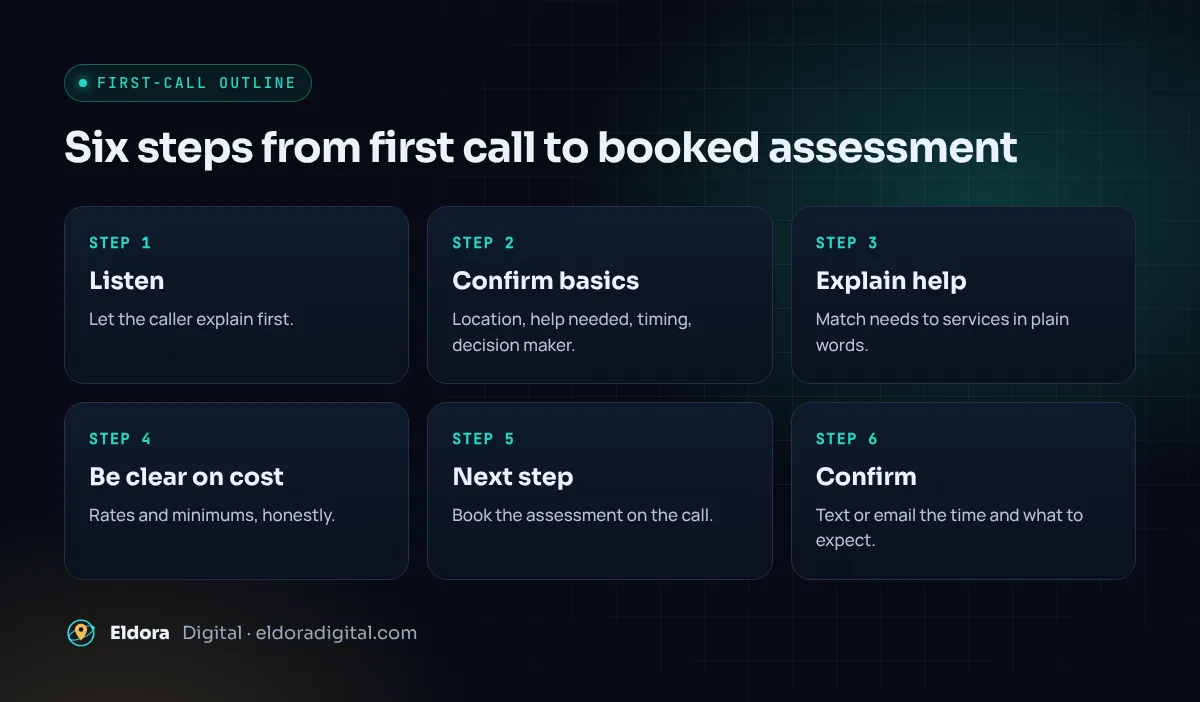
A first-call outline that works
Give your coordinator an outline, not a word-for-word script. Here's a simple flow:
- Listen first. Let the caller explain what happened. Don't rush to pricing.
- Confirm the basics. Location, type of help, timing and who makes decisions.
- Explain how you help. Match their needs to your services, in plain words.
- Be clear about cost. Share rates and minimums honestly. Surprises later lose trust.
- Agree on a next step. Book the assessment on this call if you can.
- Confirm in writing. Send a short text or email with the time and what to expect.
Avoid medical advice or promises about outcomes. If the caller describes an emergency, tell them to call 911.
Speed and after-hours coverage
Families often call several agencies in a row. The first one that answers and sounds organized usually gets the assessment. So response time matters as much as the coordinator's skill.
- Track missed calls every week.
- Reply to web forms within minutes during business hours.
- Cover nights and weekends with an on-call person, an answering service or an AI receptionist that takes details and routes urgent calls.
- Use automations for reminders and follow-up texts, with consent.
Messages are changing too. Google is testing AI-powered Business Profile messaging, so decide now who picks up conversations the AI hands off.
Privacy basics for intake
Intake calls often touch health information. Collect only what you need to plan care. Keep notes in secure systems, not personal phones or open spreadsheets. The HHS HIPAA guidance explains which rules apply to which providers, so check with your compliance advisor about your agency.
Train the coordinator never to confirm someone is a client to a caller who isn't authorized, and never in public review replies.
Numbers every intake coordinator should track
Ask "How did you hear about us?" on every call, then track four numbers by source each month:
- Inquiries.
- Assessments booked.
- Starts of care.
- Average weekly hours for new clients.
Those numbers show whether intake or marketing needs the fix. A reporting dashboard keeps them visible. For more on turning inquiries into clients, read how to get home care clients, and our referral sources guide explains how fast intake keeps referrers loyal.
See our home care marketing service, or request a free local SEO audit that includes a look at your intake path.